
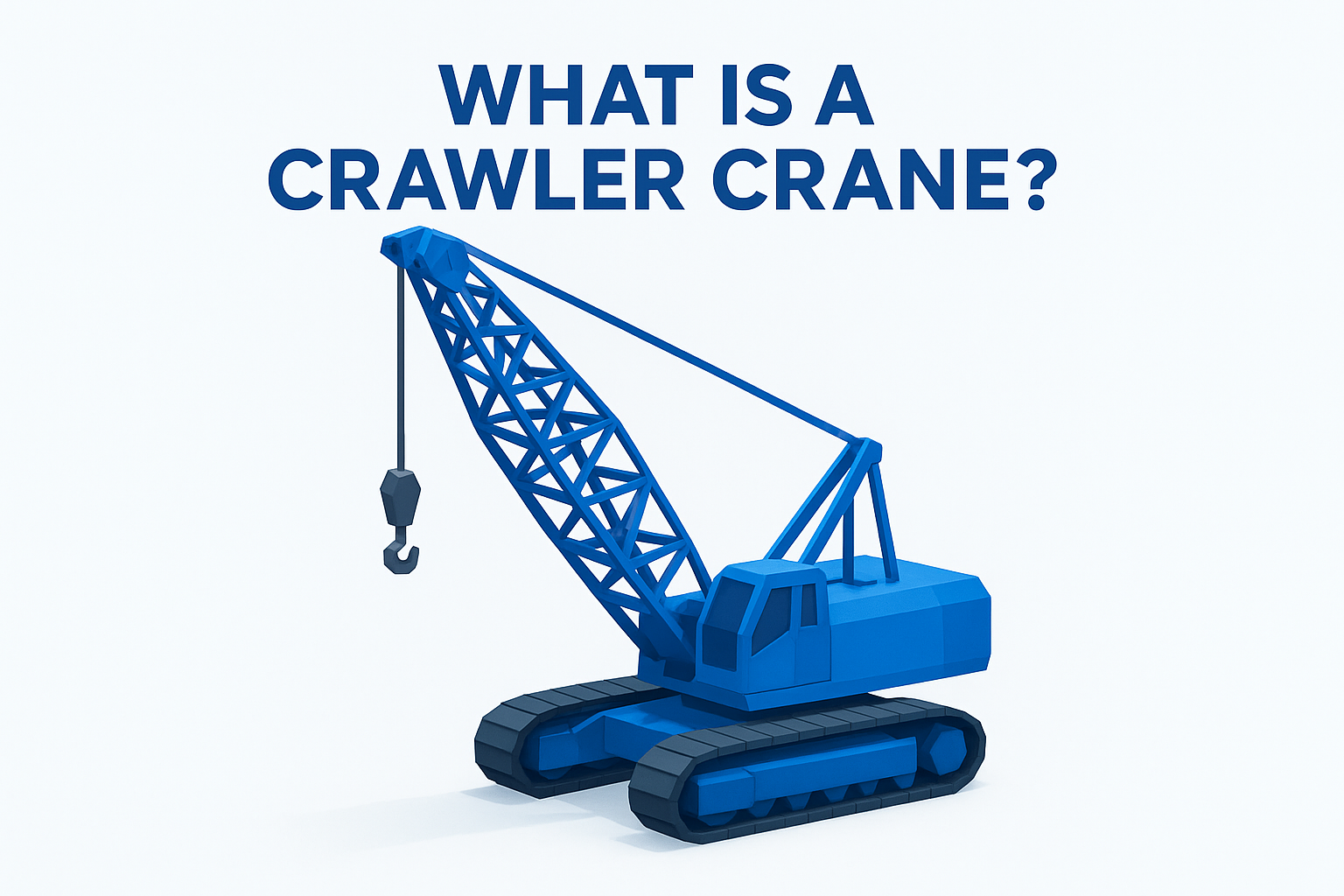
What Is a Crawler Crane? Uses, Specs, Vs Mobile Cranes Guide
Crawler cranes are purpose-built for heavy lifting on rough or unprepared ground, the kind of terrain where wheeled cranes would sink, slip, or simply fail to show up. They are a staple on large-scale infrastructure projects, from bridge construction to pipeline installation. Their tracked undercarriage distributes weight over a wide area, which lets them move under load without outriggers and work on soft soil that would stop other crane types cold.
JMT Editorial TeamPublished April 28, 20266 min read
In this guide
That combination of mobility and raw lifting power makes crawler cranes one of the most versatile heavy-lift options available. This guide covers how crawler cranes work, where they're used, key specifications to evaluate, and how they compare to mobile cranes.
Why Crawler Cranes Matter on Heavy Lift Sites
When you're planning a heavy lift, the ground beneath the crane matters as much as the crane itself. Crawler cranes spread their weight across a large track footprint, which dramatically reduces ground pressure. A typical wheeled crane concentrates its load through outrigger pads, but a crawler distributes it continuously along both tracks, letting you work on ground that would otherwise require expensive ground improvement or mat systems. Reducing ground pressure is often the deciding factor on soft-soil sites, where conventional wheeled cranes simply cannot operate safely.
Stability Without Outriggers
One of the practical advantages of a crawler crane is that it can travel and lift without deploying outriggers. Outrigger setup takes time on every relocation, and on congested sites with multiple trades working around you, that delay adds real cost. Crawler cranes cut that step out entirely, letting your crew reposition the machine and resume lifts far faster than mobile crane alternatives. The tracked undercarriage also provides a wide, stable base that holds consistent even when the machine slews or booms out to maximum radius.
Capacity at Long Radii
Large crawler cranes can reach lift capacities of several hundred tons while maintaining rated loads at radii that would fall outside a comparable mobile crane's chart. For projects like these, that combination of reach and capacity makes the crawler crane the default choice rather than a specialty option:
- Bridge beam placement
- Wind turbine tower and nacelle installation
- Heavy industrial equipment setting
- Precast concrete panel erection on high-rise structures
How a Crawler Crane Works and Its Main Parts
A crawler crane builds its lifting power around a lattice boom and a tracked undercarriage. The boom adds sections to reach the required height, while the undercarriage carries the entire machine across the site without needing road preparation or outrigger positioning.
The Undercarriage and Tracks
Steel tracks run along both sides of the machine and distribute the crane's weight across a much larger footprint than wheels or outrigger pads ever could — that's what gives it the ability to move on soft ground while carrying a load. The track width and length directly determine how much ground pressure the machine generates, so always check these figures against your site soil reports before mobilizing.
The Boom, Counterweight, and Hoist System
The lattice boom connects to the crane body through a pivot point and is held at the working angle by wire pendants. A counterweight mounted at the rear balances the load during each lift cycle. The hoist drum, driven by hydraulic or mechanical power, controls the hook block through wire rope. Capacity is adjusted by changing boom length, boom angle, and counterweight configuration to match each individual lift.
Where Crawler Cranes Fit Best: Common Applications
Their low ground pressure and high capacity make crawler cranes the right tool wherever soft terrain, heavy loads, or tight repositioning windows combine.
Civil Infrastructure Projects
Bridge construction and highway interchange work demand heavy lifts where ground conditions vary significantly across the site. Precast beam placement and structural steel erection are the most frequent tasks, and the crawler's ability to reposition without outrigger deployment keeps your schedule moving.
- Bridge girder and beam placement
- Highway overpass steel erection
- Dam construction and waterway crossings
Industrial and Energy Sector Work
Refinery shutdowns, power plant equipment setting, and wind turbine erection all share one demand: large single-lift weights at tight installation tolerances. These jobs require a crane that holds its rated load at extended radii without adjustment, and crawlers consistently meet that standard. You'll also find crawlers on petrochemical plant expansions and offshore platform module-setting jobs where repositioning speed and ground-bearing performance are both non-negotiable.
Key Specs to Check Before You Buy or Hire
Before you commit to purchasing or hiring a crawler crane, match the machine's core specifications against your actual project demands. Buying on price alone without verifying the numbers leaves you with a crane that cannot handle the lifts your site requires.
Lifting Capacity and Boom Length
Maximum rated capacity only applies at a specific radius and boom angle, so always check the load chart at your actual working radius rather than the headline figure. Key data points to pull from the load chart include:
- Rated capacity at your maximum working radius
- Boom length configurations available
- Jib attachment options for additional reach
Track Width, Ground Pressure, and Transport Weight
Track width and length determine ground-bearing pressure, so compare these figures against your site's soil reports before you mobilize. Wider tracks reduce ground pressure. Transport weight is equally important because the machine travels to site disassembled, and your haul routes need to handle each individual component safely.
Crawler Crane vs Mobile and Spider Cranes
Crawler, mobile, and spider cranes each occupy a distinct role, and picking the wrong type costs you time and money on site.
How Crawlers Differ from Mobile Cranes
Mobile cranes travel on rubber tires under their own power and deploy outrigger legs before each lift. That setup makes them faster to move between distant sites, but slower to reposition on congested ground. Crawler cranes skip outrigger deployment entirely and handle heavier loads at longer radii, which is why large infrastructure and industrial projects favor them over mobile options.
Where Spider Cranes Fill a Different Role
Spider cranes use extendable legs rather than tracks and are built for indoor or confined-space lifts where a full-size crawler cannot fit. Their lifting capacities stay well below what crawlers achieve, so they suit finish-phase construction tasks rather than primary structural lifts. If your site has access restrictions rather than heavy-load requirements, a spider crane is worth evaluating as a separate category.
Wrap-Up and Next Steps
Understanding what a crawler crane is comes down to three core points: tracked undercarriage for low ground pressure, high lifting capacity at long radii, and the ability to reposition without outrigger deployment. Those three features explain why crawlers dominate heavy infrastructure and industrial lift sites where mobile cranes fall short on soft ground or high-capacity requirements.
Choosing the right machine for your project starts with comparing your load chart requirements against available specifications, then factoring in ground conditions, site access, and transport logistics.
Related categories
Related guides
Still looking for the right machine?
Tell JMT what you need, or browse everything currently in stock.